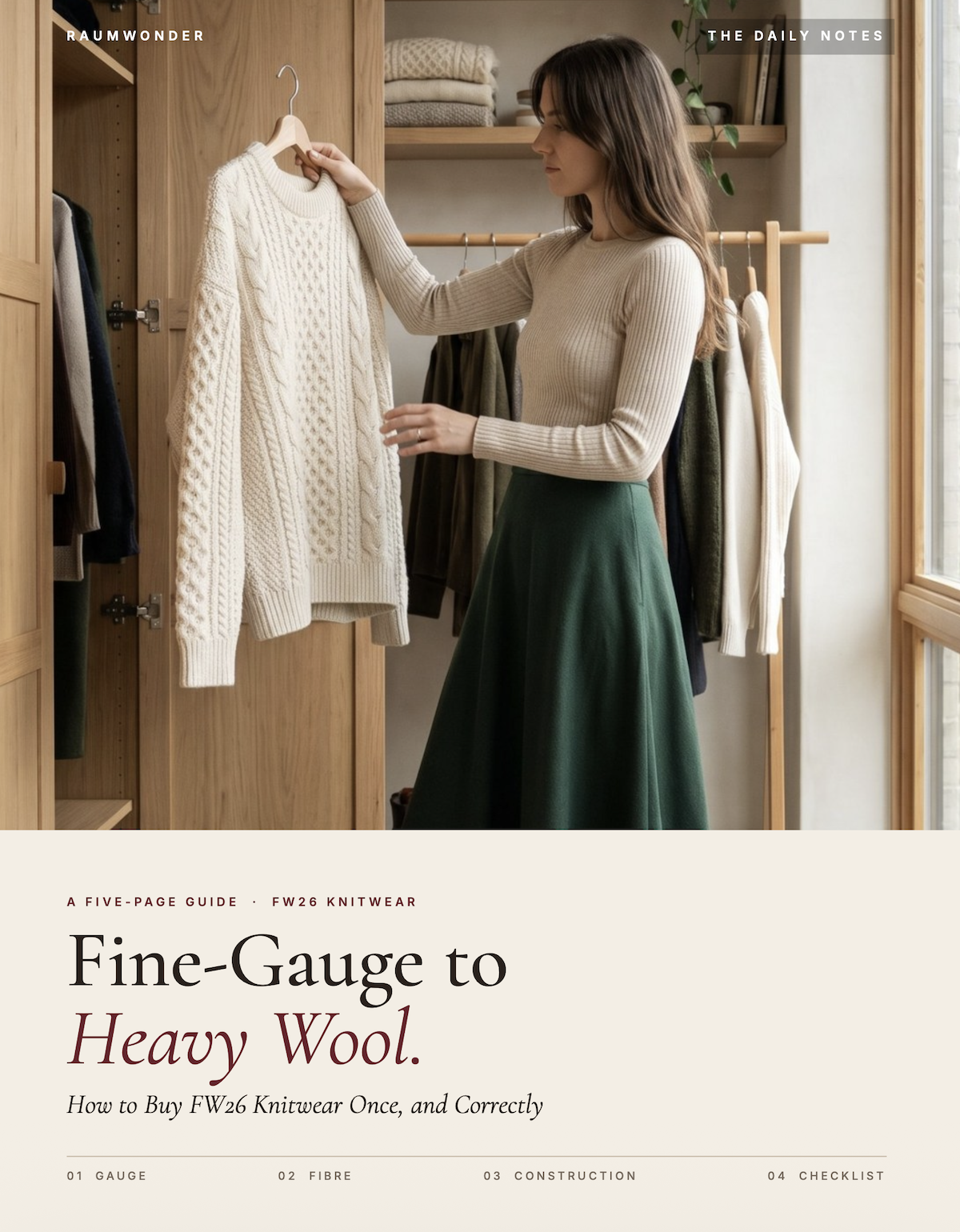
Showroom agents describe knitwear as a core category for the season, and forecasters frame it as shifting from a winter purchase to a year-round foundation. A good sweater can outlast a decade of trend cycles; a poor one pills by February. The useful question is not which knit to buy, but how to read one. And what, exactly, are you paying for?

Gauge Is the First Decision, Not the Last
Gauge counts the needles per inch on a knitting machine: the lower the number, the heavier the knit. Around 3gg gives chunky, sculptural texture; 7gg is the versatile middle; 12gg and above produces a smooth, close surface that slips under tailoring.
Gauge decides formality as much as warmth. Fine knits behave like a knitted shirt; heavy knits behave like outerwear. Few product pages state it clearly.
Have you ever noticed which of your sweaters you actually reach for, and why?
How to Style It: A Four-Gauge Capsule
14–16gg merino crew: under jackets and coats, into the shoulder seasons
12gg cashmere or cashmere-blend crew or cardigan: the everyday core
7gg lambswool crew: weekends, travel, worn on its own
3–5gg cable or fisherman knit: one statement piece for deep winter
Fibre Length Matters More Than Fibre Name
The word cashmere on a label tells you surprisingly little. Longevity is decided by staple length, yarn twist and blend. Longer fibres leave fewer loose ends at the surface, so they pill less. Short fibres, brushed hard to feel soft in the fitting room, often look tired by spring.
A few brands now publish micron counts (under 19 microns indicates finer cashmere) and fibre length in millimetres. A dense, well-spun lambswool can easily outlast a cheap, cloud-soft cashmere.
Distrust instant softness and always ask for micron count, fibre length and origin. If a brand cannot answer, factor that into the price.
Construction You Can Read in Thirty Seconds
Turn the sweater inside out. Fully fashioned pieces are knitted to shape and linked together, rather than cut from a larger panel and overlocked; look for small fashioning marks at the armholes and neckline. Stretch the cuffs gently and watch them recover. Hold the knit to the light: even density resists snags and pilling.
FW26 runways favour expressive shapes, from Isabel Marant's sweater dresses to Schiaparelli's mesh-panelled turtleneck and Zankov's argyle. Expression earns its place only when the build is sound.
Shape and seams outlive surface and a clean linked seam is worth more than a trend detail.
How to Shop It: The Six-Point Checklist and a Free Guide
Knitwear rewards patience more than budget. A well-made merino at a mid price can outwear careless cashmere at twice the cost. Before buying, ask three questions: which gap does this fill, which gauge does it need, and will it still look like itself after fifty wears? Then buy once, and care for it properly.
Here are the most important things to keep in mind before buying your next knit garment:
Gauge: as stated in this post, and right for the role in your wardrobe
Fibre: high natural-fibre content; micron count and staple length published where possible
Surface: minimal loose fuzz; rub the knit with your palm and check for early pilling
Construction: fully fashioned or linked seams; ribbing that springs back
Provenance: a named origin and recognised certification such as RWS or ZQ, not vague "responsibly sourced" language
Cost per wear: price divided by realistic wears over five winters
Download the free Knitwear Guide here.