
Neuroaesthetics at Home: Designing a Room That Lowers Your Heart Rate
Neuroaesthetics has become interior design's favourite alibi. Curved sofas, limewashed walls and amber bulbs now arrive with claims about cortisol and calm. The underlying science is real, but smaller than the marketing: most studies are brief, lab-based and measured in modest shifts. So what does the evidence support, and how far can it carry one room?
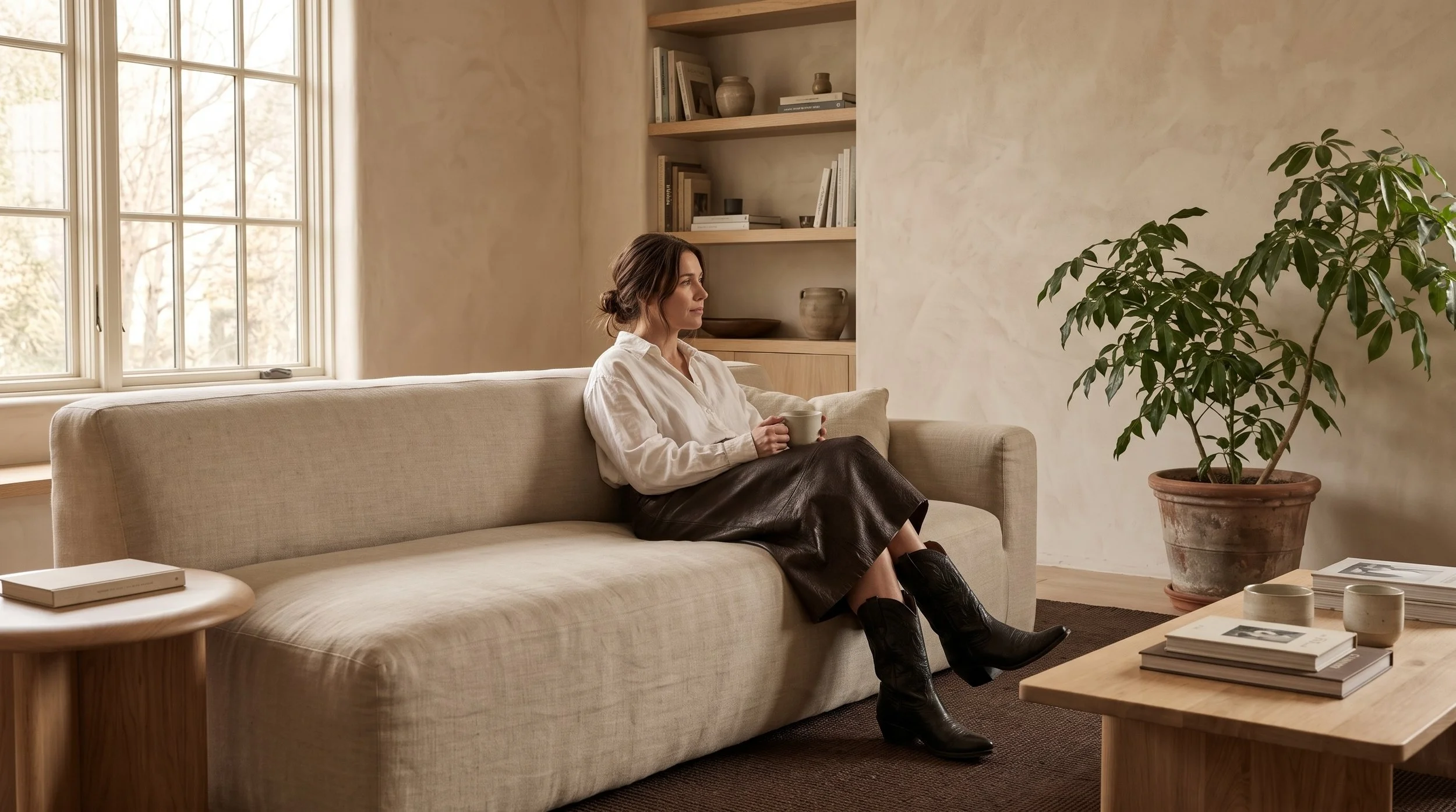
Light: Warm, Low and Late
The firmest evidence concerns timing rather than mood. In a 2005 study by Christian Cajochen's group, two hours of short-wavelength blue light in the late evening suppressed melatonin more than green light, and raised heart rate and core body temperature. A smaller Taiwanese sleep-lab study found that 5000K light before bed delayed sleep onset, while 3000K performed no differently from dim light.
The lesson is not that amber light soothes, but that bright, cool evening light keeps the body alert.
How Can You Style Your Home, Using this Findings?
Use 2700–3000K bulbs in every lamp you switch on after dark.
Light the room from table and floor lamps rather than overhead downlights.
Put evening lamps on dimmers, and lower them as the night goes on.
Texture: Wood, in Proportion
Wood carries the most-cited physiological evidence in interiors research, and the most misquoted. In a 2007 Japanese study using actual-size rooms, a room clad 45% in wood lowered diastolic blood pressure and tended to feel most comfortable; at 90%, early drops in blood pressure gave way to a rising pulse. A 2010 University of British Columbia study of 119 students found lower stress activation in offices with wood surfaces.
Preference matters: in one study, blood pressure fell only in viewers who liked the wood.
Design with Nature
Aim for a measured share of wood, not a fully clad room.
Choose species and grain you genuinely respond to; taste shaped the response.
Let one generous surface carry the material: a dining table, a floor or a wall of shelving.
Composition: Curve What You Touch
The famous curvature finding needs the most care. Oshin Vartanian's 2013 study found people judged curvilinear interiors beautiful more often, yet curvature did not change whether they wanted to enter. The 2026 Frontiers paper notes that the study relied on briefly shown photographs, and that its curved examples skewed toward expressive, high-design rooms. Its own early results, from rendered scenes, suggest foreground elements such as seating and thresholds shape judgments more than background walls.
None of this measured heart rate.
How to Style Curves In Your Room
Put curves where the body meets the room: a rounded table edge, an upholstered armchair, an oval rug.
Leave the walls alone; no renovation is required.
Treat soft geometry as a taste worth testing, not a rule.
Let Your Rooms Support a Balanced Heart Rate
Can a room lower your heart rate? Modestly, briefly, and partly because you like it. The evidence favours warm, low evening light, a measured proportion of wood you respond to, and soft forms within reach. Read neuroaesthetics as a set of promising hypotheses rather than a formula, and test them in one room first.
Start with the room you use most after dark. Change the bulbs first: it costs least and rests on the strongest evidence. Live with the result for two weeks before buying anything new.