
The western boot survives FW26 by losing its costume: clean lines, good hide, and a new colour story.
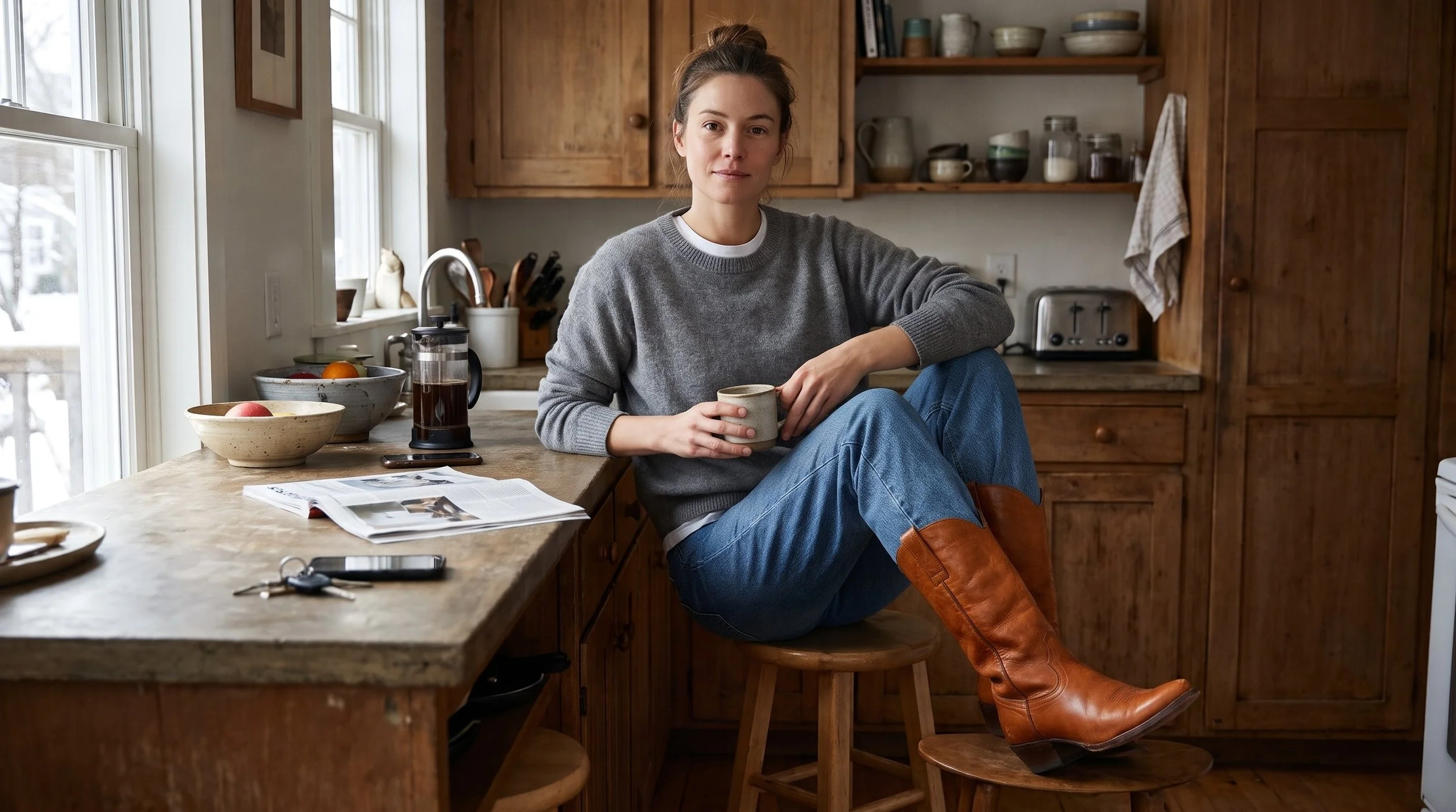
Here is how you know the cowboy boot has changed: you can wear a pair all day and nobody says "yeehaw." Nobody asks where you parked the horse. A colleague glances down, sees a pointed toe and a slanted heel under your trousers, and thinks only: nice boots.
That is new, because for most of its fashion life, the western boot arrived with its own soundtrack. This season it comes in silence. No embroidery, no rhinestones, no contrast stitching. What remains is a clean shape in polished chestnut, and it may be the most useful boot you own this winter.
The costume problem
The cowboy boot began as work equipment, and every part had a job. The pointed toe finds the stirrup. The angled heel stops the foot sliding through it. The tall shaft protects the leg.
Then came the decoration: stitched flames, eagles, inlaid stars. Wonderful on a dance floor in Texas, harder on a Tuesday in the city. The louder a boot says "western," the more the rest of your outfit has to answer it. Add denim and a fringed jacket and you are suddenly dressed as a character.
That is why the trend keeps rising and crashing. The boots come back loud, a festival summer wears them out, and they move to the back of the wardrobe. The open question for this season was whether the boot could survive without the theme.
What survived the edit
The shape did, and on the fall/winter 2026 runways, the western references went quiet: a snip toe (pointed, with the very tip squared off), a low stacked heel, pull tabs at the collar, and little else.
Take away the embroidery and you notice how good the design is. The slanted heel gives height you can walk in. The toe lengthens the leg. The shaft, now cut slimmer, slides under trousers.
With the decoration gone, the leather has to do the talking. Look for smooth calf or soft suede, with one line of tonal stitching at most.
Cheap hide has nowhere to hide.
The colour has moved too. Dark chocolate has given way to chestnut and cognac, warmer browns that catch the light and show the grain. They are friendlier than black and sit well with nearly every winter colour: grey, cream, navy, olive, burgundy.
How to wear them in fall and winter
One rule covers almost everything: let the boots be the only western thing you have on. Treat them like any good ankle boot and build the outfit as usual.
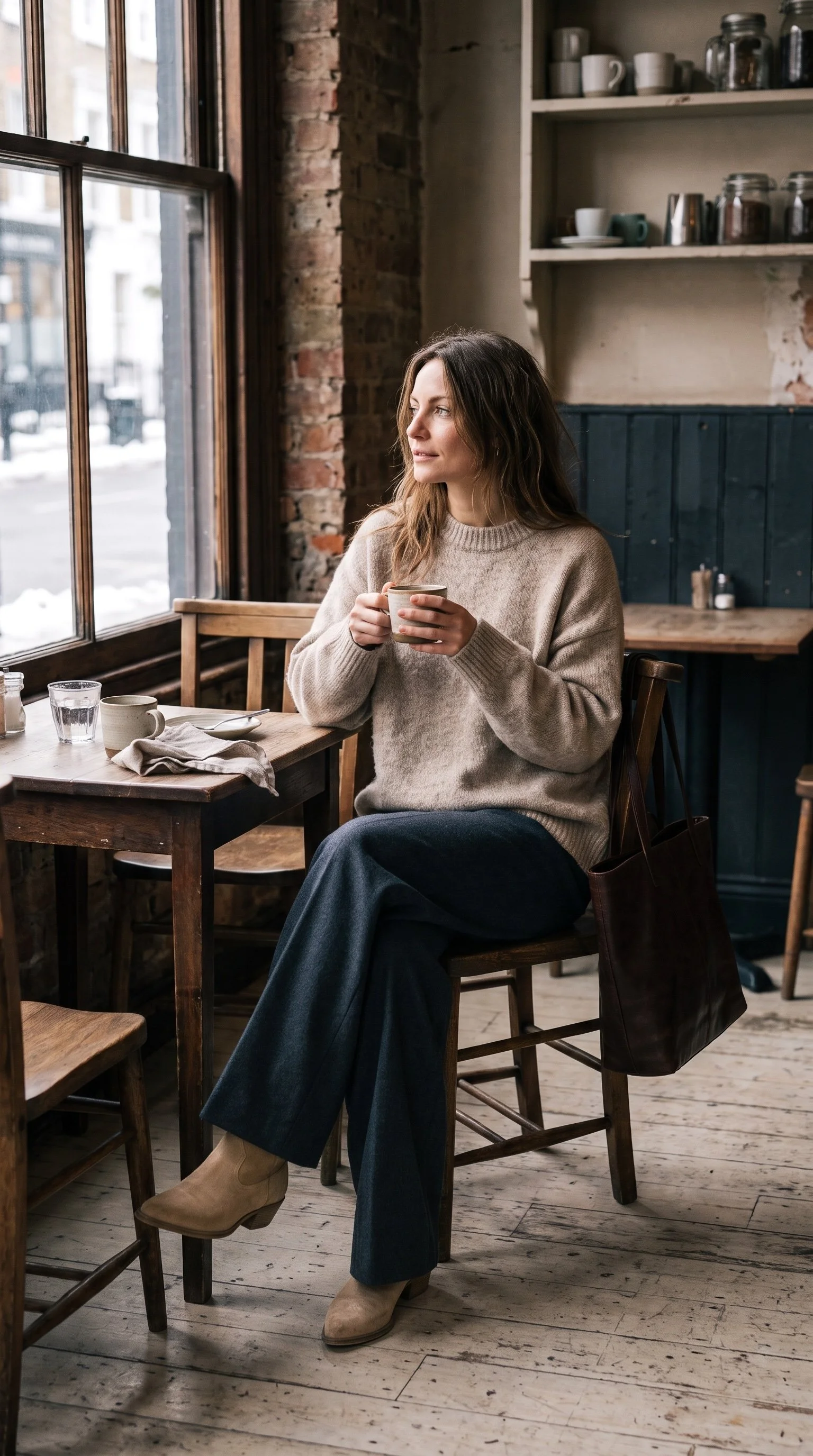
Trousers over the boot. Straight or wide-leg wool trousers, hem long enough to cover the shaft, so only the toe and heel show. This is the quietest way to wear them, and the most current.
Straight jeans. Dark indigo or ecru, with the hem resting on the boot. Skip the tuck-in and the big buckle belt.
Knit dresses and skirts. A ribbed midi dress or a satin slip skirt with a heavy sweater. Add tights in burgundy or chocolate when it gets cold.
A long coat. A tailored wool coat or a trench keeps the line clean. Leave the fringe at home.
Grey flannel. Chestnut next to mid-grey is the pairing people forget, and the one that gets compliments.
Where they go
The office. Grey trousers, a fine knit and a blazer. Under a full-length hem, the boots read as smart ankle boots with a slightly better heel.
Dinner. A black knit dress or a slip dress under an oversized blazer. The boots take the sweetness out of the dress.
The weekend. Jeans, a big scarf, a market bag. This is the outfit the boot was always good at.
The holiday party. Cognac boots under a velvet or satin skirt, in place of heels. You will still be standing at midnight.
One practical warning: slush and road salt are hard on leather soles and suede. Ask a cobbler for a thin rubber half-sole, spray suede before the first wear, and wipe salt off the same evening.
The three-second test
Before you buy, cover the boot with your hand so that only the toe and heel are showing. If it still looks good, it will outlast this season. If it needs the embroidery to be interesting, so will every outfit you put with it.
Fashion spent years dressing the cowboy boot up. The best version, it turns out, was underneath the whole time.