
Edited Maximalism: Adding Personality Without Adding Noise
For a decade, minimalism promised calm and too often delivered sterility. In 2026, the most compelling rooms are quietly changing course. Edited maximalism keeps the architectural restraint we love, such as plaster walls, honest timber and generous negative space, while inviting back the things that make a home unmistakably yours: inherited ceramics, a faded kilim, a heavy oak chest with a story. The question is no longer how little you can own, but how deliberately. Here is how to layer personality into a minimal room without forfeiting its calm.
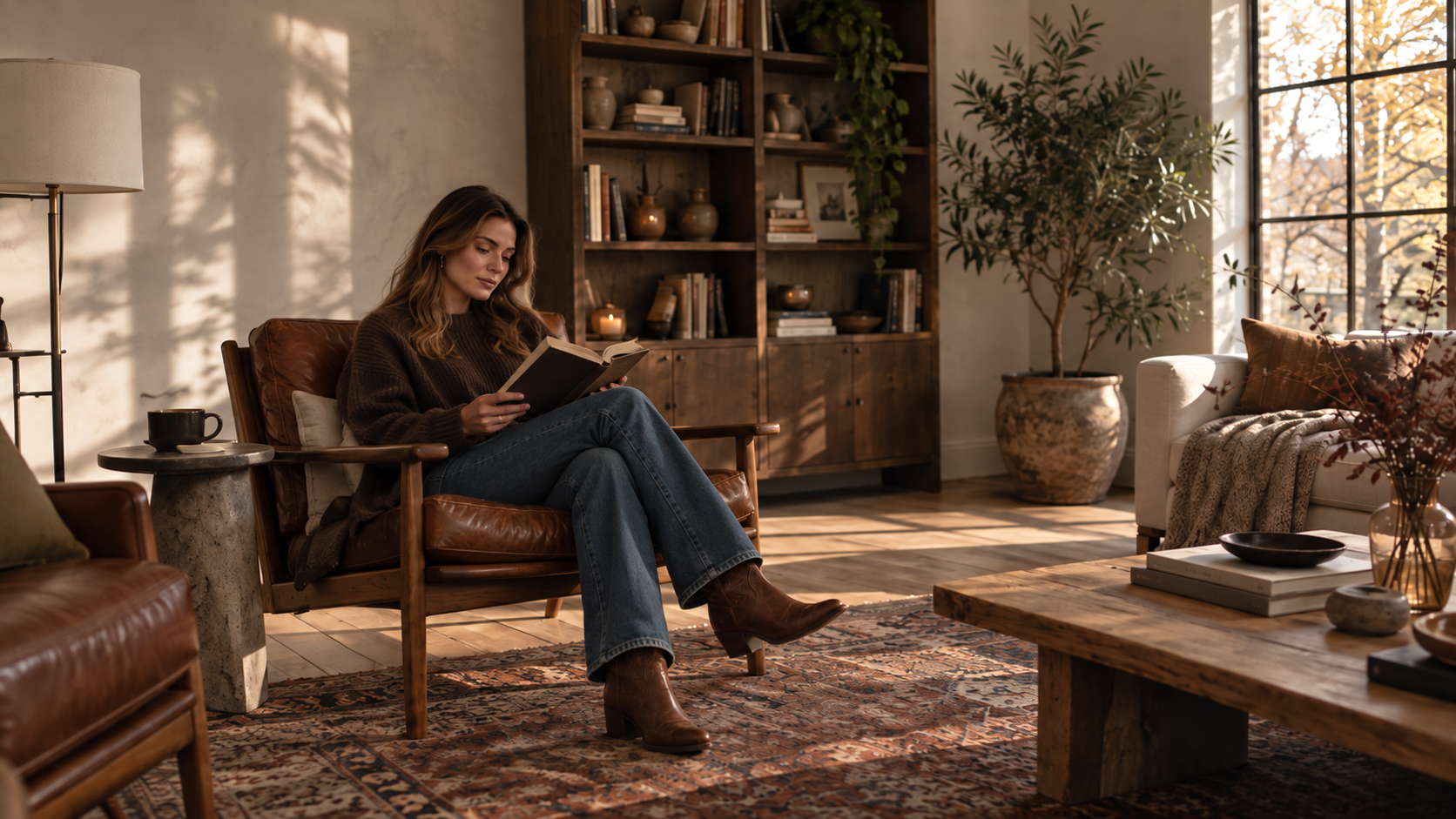
Collected Objects, Curated Like a Gallery
The difference between a collection and clutter is intention. Edited maximalism treats objects as exhibits rather than accessories, and gives each piece enough breathing room to be seen.
Look at a single shelf the way a curator would. What earns its place, and what is simply filling space?
Minimalism has had its day; now, when furnishing our spaces, we’re looking for something more—for warmth and a sense of groundedness, for things that tell a story and, at the same time, bring us peace.
How to Style Your Room With Edited Maximalism
Group in odd numbers. Use three or five pieces of varied heights.
Find a shared thread. Connect the pieces through a palette, a material or a region of origin.
Leave a third of every surface empty. That void is what keeps the calm.
Pattern as Texture, Not Spectacle
Pattern returns in 2026, but quietly. Think tone-on-tone block prints, washed ikat and hand-loomed stripes rather than high-contrast florals.
The secret is scale and saturation. When patterns share a muted palette, they read as texture from across the room and reveal their detail only up close. Could your cushions, throw and rug share a softer conversation?
Use Pattern Carefully with Intention
Anchor with one large-scale pattern. A rug or a curtain works well.
Layer one medium and one small pattern in the same color family.
Repeat each motif at least twice so it reads as intentional rather than accidental.
The Weight of Vintage
Nothing grounds a pared-back room like a piece with history. A worn leather armchair, a travertine side table or a 1970s Italian lamp lends a visual weight that new furniture rarely matches.
Vintage furniture is also the most sustainable purchase you can make, which fits naturally with slow living. Which piece in your home would you still love in twenty years?
Your Vintage Collection, Well Curated
Choose one statement vintage piece per room and let it lead.
Balance dark, heavy woods with linen, limewash and pale stone.
Favor patina over perfection. Wear is evidence of a life lived.
Owning Less Pieces With More Intention
Edited maximalism is not about owning more. It is about choosing better and displaying with conviction. Begin with a calm architectural envelope, then add only what carries meaning. The result is a room that feels collected over a lifetime, quiet yet unmistakably personal.
“Vintage” is a very general term that’s often used—not only in interior design, but also in fashion and on many Pinterest boards. You should carefully select authentic antique furniture and objects and see how they fit into your overall style. This will add more character and value to your interior design with items that, while they’ve been around for a long time, are precisely because of that so timeless.