
Refine, Don’t Replace: The FW26 Capsule Wardrobe Audit
Every autumn brings the same quiet pressure to start over. The most compelling wardrobes are not rebuilt each season, though. They are edited. Fall/Winter 2026 makes editing easier than usual: buyers noted the runways stepping back from the extremes of recent seasons in favor of more wearable, polished dressing. This capsule wardrobe audit starts with what already hangs in your closet and measures each piece against the season’s real shifts. Before you add anything to a cart, ask yourself which pieces simply need a new context.
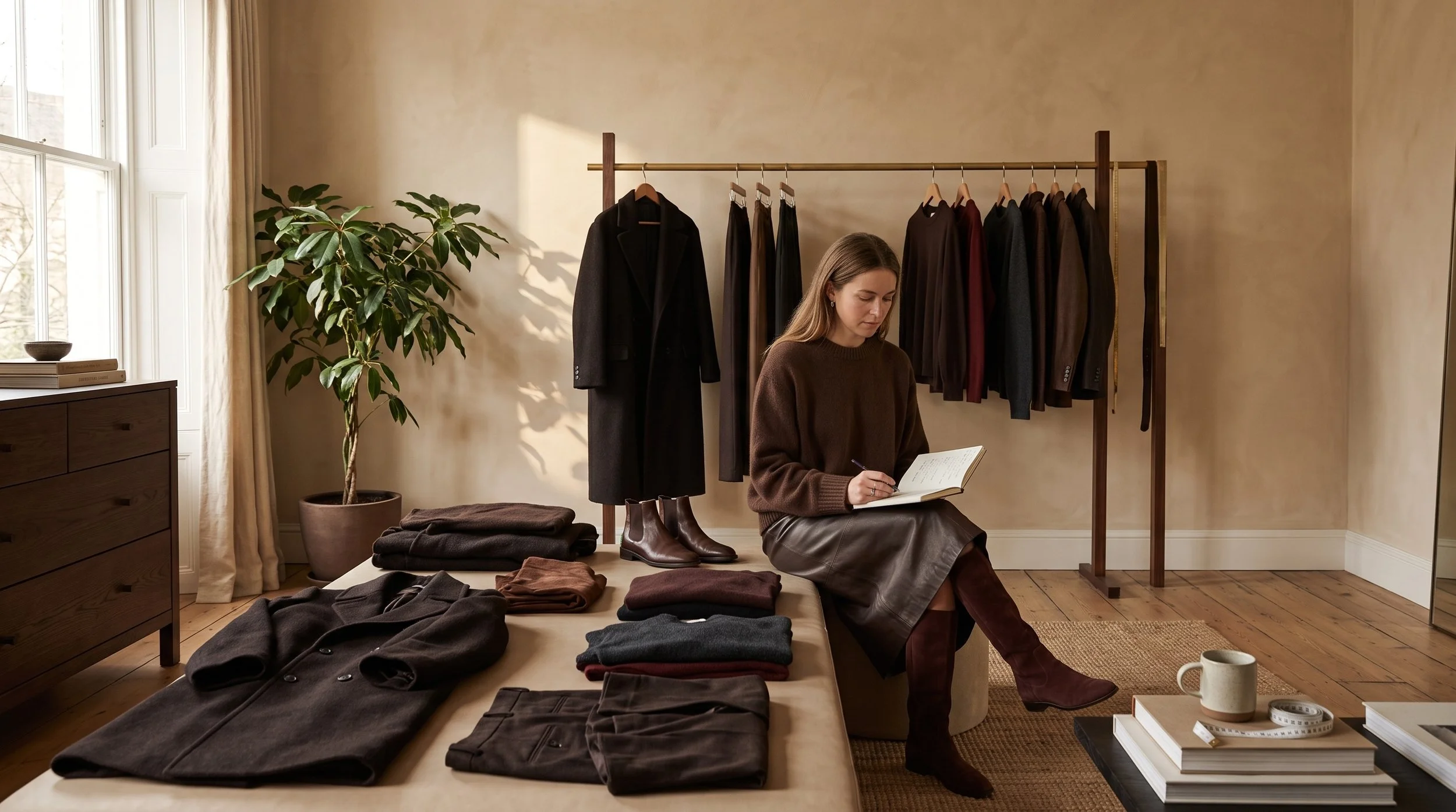
Tailoring, Reconsidered as a Set
Skirt suits were everywhere on the FW26 runways, from a lapel-less version at Jil Sander to deconstructed tailoring at Ferragamo. The appeal is in the matching. Two halves read as one deliberate thought.
You probably own more of this trend than you think. A structured blazer and a midi skirt in a similar weight and tone can work as a suit without either being new.
How to Audit It
Pair before you purchase: Lay out every blazer next to every skirt and trouser. Note which pairs feel tonal.
Check the fit: Shoulders that fit can be kept. Sleeves and hems can go to a tailor.
Edit by fabric: Wool, crepe and gabardine age well. Synthetic blends that shine under light rarely do.
Texture Over Novelty
Texture was one of the season’s central themes, and statement outerwear carried much of the weight, often drawing on ’80s references from house archives. For the slow-fashion wardrobe, this is good news. Texture is a property of material, not of trend.
Your audit should therefore be tactile. Run your hand along each coat, knit and jacket. Does it feel substantial, or does it feel tired?
How to Organize This For a Slow-Fashion Wardrobe
Keep boiled wool, brushed mohair, bouclé and heavy cashmere.
Restore coats with pilling or loose buttons. A fabric shaver and new horn buttons can make an old coat look new again.
Release pieces that look good in photos but feel thin against the skin.
A Palette Hidden in Plain Sight
The season’s palette has moved on from spring’s bright primaries to bottle green, ochre, scarlet and purple, with deep burgundy also emerging as a winter staple. These shades flatter natural fibers and sit easily alongside camel, charcoal and ivory.
Look for them first in the margins of your wardrobe: a scarf, a forgotten knit, a leather bag. Which of these could become the one accent your neutral foundation has been waiting for?
How You Find Your Style
Let one saturated color carry the outfit, and keep everything else tonal. A bottle-green cardigan over grey flannel trousers is quieter than any new purchase, and more personal.
The Goal Is a Shorter Shopping List
The FW26 capsule wardrobe rewards attention more than acquisition. Pair what you own into suits, choose fabrics by touch, and look for the season’s palette in your accents. The best audits end with a shorter shopping list and a deeper appreciation for the pieces you already chose well.
The less you buy, the more you gain. At first glance, this logic may not make sense, but from an ethical and economic perspective, fashion today is an investment in sustainable clothing designed to last longer. Thrift stores have created a wonderful secondary market that demonstrates how a minimalist wardrobe can work. After taking stock of your capsule wardrobe, your fall/winter 2026 collection won’t look dated or boring. It will be richer and more valuable thanks to the pieces that really matter.
A glamorous look might be appropriate for a dinner invitation. But vintage pieces—such as well-worn brown leather or caramel-coloured suede cowboy boots that have passed your capsule wardrobe audit—will last you for many years to come and pair perfectly with your everyday outfits.